
Best RaceChip Alternative for Audi Owners Compared
Quick Summary
A racechip alternative for Audi owners depends on engine code, driving style, and how hands-on you want to be. Piggyback modules like JB4 offer user-adjustable maps and logging, while ECU tunes rewrite the factory calibration directly. Confirm your engine code before ordering any tune.
- A piggyback module splices into the wiring and sends modified signals to the factory ECU, leaving its calibration untouched.
- An ECU tune rewrites calibration tables inside the factory computer, covering boost, fueling, and ignition timing.
- JB4 supports user-adjustable maps, logging, and fault-code reading on supported Audi applications, which RaceChip largely does not.
- Confirm your engine code before ordering, since a tune built for one engine will not behave correctly on another.
- Our Audi tunes include the FlashZilla handheld device, and the A3 1.8T TSI FWD tune starts at $505.10.
Table of Contents
- Why Audi Owners Look Beyond RaceChip
- Piggyback Tuner vs. ECU Tune: What Actually Changes
- JB4 vs. RaceChip for Audi: How the Two Compare
- Tunezilla Tuning for Audi: What Is Included
- H&A Midwest Audi ECU Tunes Compared by Engine and Price
- Choosing the Best RaceChip Alternative for Your Audi
- Ordering Your Audi Tune: Confirm Fitment Before You Buy
- Frequently Asked Questions
Why Audi Owners Look Beyond RaceChip
Last Updated: November 19, 2026
Audi owners who want more power from their cars often start with a RaceChip, then find themselves asking whether a different tuning path would suit their car better. That question is worth taking seriously. The right racechip alternative for Audi owners depends on engine code, driving style, and how much hands-on work you want to do. This guide walks through the options honestly, including where a RaceChip still makes sense.
Most owners who look elsewhere share a few concerns: how closely a tune matches their exact engine, whether the hardware is included, and how easy the install is. Those concerns shape everything that follows.
Piggyback Tuner vs. ECU Tune: What Actually Changes
A piggyback tuner and an ECU tune both raise output, but they intervene at different layers of the engine management system. Understanding which layer each one touches explains why they behave differently on an Audi, why one is easier to reverse, and why the same engine can respond very differently to each.
A piggyback module, RaceChip, JB4, and similar devices, installs in the engine bay and splices into the wiring between the factory ECU and its sensors. It reads signals such as manifold boost pressure, rail pressure, and cam or crank position, then sends the factory computer a modified version. The ECU still runs its own software; it simply receives inputs that make it request more boost or fuel. Because the factory calibration is untouched, the module can usually be unplugged and the harness returned to stock. The trade-off is that the piggyback is working blind relative to the ECU's internal torque model: it can only shift signals, not rewrite the tables that decide timing, lambda targets, or torque limits.
An ECU tune rewrites the calibration inside the factory computer itself. On Audi's Bosch and Siemens ECUs, that means recalibrating the boost target maps, torque limiter, fueling and lambda targets, ignition timing, and often the throttle pedal map. Because the tuner is editing the tables the ECU actually uses, the result can be smoother and more consistent than a signal-shifting box, the ECU knows what it is being asked to deliver. The trade-off is that the change lives in the ECU, so reverting means flashing the original file back, and the tune is tied to the specific engine code and software version on the car.
A third path, the TCU tune, recalibrates the transmission control unit rather than the engine. On Audi S tronic and tiptronic gearboxes, a TCU tune raises clutch clamping pressure, shortens shift times, and lifts torque limits so the gearbox can accept the extra output an ECU tune produces. Engine and gearbox are separate computers, so an ECU tune and a TCU tune are separate purchases and separate files.
| Approach | What it changes | Reversibility | Best suited to |
|---|---|---|---|
| Piggyback module | Sensor signals to the factory ECU | Unplug and remove the harness | Owners who want a removable bump and minimal hardware |
| ECU tune | Calibration tables inside the factory ECU | Reflash the original file | Owners who want integrated boost, fueling, and timing control |
| TCU tune | Transmission calibration and torque limits | Reflash the original file | Tuned cars whose gearbox is the limiting factor |
Watch out: a piggyback that only shifts the boost sensor can push the ECU past its torque model without the fueling and timing changes to support it, which is one reason some owners see fault codes or inconsistent pull under load. An ECU tune built for the engine code addresses those tables directly, but only if the file matches the code on the car.
Confirm your engine code before you order, because a tune built for one engine will not behave correctly on another. If you are weighing a piggyback against a reflash, decide first what you want to control, boost only, or boost plus fueling and timing, and let that answer pick the method.
JB4 vs. RaceChip for Audi: How the Two Compare
JB4 and RaceChip are the two piggyback names Audi owners most often cross-shop, and they differ in ways that matter once you are past the marketing page. Both sit between the factory ECU and its sensors, but they are built around different assumptions about how much the owner wants to adjust and how the device talks to the car.
RaceChip's Audi range is organized around a plug-in module with a harness that connects to the boost pressure and, on some applications, rail pressure sensors. The tuning is delivered as a map loaded onto the device, and the more capable variants add app-based map selection and a handful of preset levels. The emphasis is on a fit-and-forget install: connect the harness, secure the module, and drive. Adjustment is limited to choosing among the maps the manufacturer supplies for that engine.
JB4 takes a more open approach. It is a piggyback with a control box that supports user-adjustable maps, logging, and, on supported Audi applications, communication with the car's CAN bus for data and fault-code reading and clearing. That logging capability is the practical difference: a JB4 owner can watch boost, timing, and fuel trims under load and change settings, where a RaceChip owner is largely working with the maps the manufacturer provides. The cost of that flexibility is more setup, more wiring, and more decisions the owner has to get right.
| Consideration | RaceChip | JB4 |
|---|---|---|
| Install style | Plug-in harness, fit-and-forget | Harness plus control box, more setup |
| Adjustment | Manufacturer-supplied maps, app on higher tiers | User-adjustable maps and settings |
| Logging and fault codes | Limited | Logging and code read/clear on supported applications |
| Reversibility | Unplug and remove | Unplug and remove |
| Best suited to | Owners who want a set map and minimal involvement | Owners who want to log, adjust, and troubleshoot |
Neither device rewrites the ECU calibration, so neither can change timing targets, lambda targets, or the torque model the way an ECU tune can. Both are also working against the factory ECU's own logic, which is why the quality of the harness and the map for your specific engine code matters more than the brand on the box.
Watch out: piggyback maps are written for a stock or near-stock car, and stacking one on top of existing hardware changes, a downpipe, an intake, a different fuel, can push the device outside the conditions its map was built for. Check the manufacturer's stated requirements for your model year and engine before you buy, and verify the current specifications yourself rather than relying on a summary.
We do not publish independent dyno results for competitor products, and we would rather you verify those details yourself than rely on our summary. What we can tell you is where the piggyback path stops: if you want the ECU's own fueling, timing, and torque tables recalibrated for your engine code, that is an ECU tune, and it is a different category of product from either of these two.
Tunezilla Tuning for Audi: What Is Included
Our Audi tunes are sold with the required FlashZilla handheld device, so you do not need separate hardware for installation. That bundling is a deliberate choice: the device and the tune file are matched, which removes the guesswork of pairing an incompatible tool with a file. Each product page lists the tune price, and the price shown is the one you pay for the tune with the device included.
H&A Midwest Audi ECU Tunes Compared by Engine and Price
Prices below are the starting prices listed on each product page.
| Model and engine | Tune type | Starting price |
|---|---|---|
| Audi A3 1.8T TSI FWD | ECU tune | $505.10 |
| Audi A3 2.0T EA888 EVO4 | ECU tune | $433.10 |
| Audi A3 2.0 TDI | ECU tune | $469.10 |
| Audi A3 2.0 TFSI EA8113 | ECU tune | $433.10 |
| Audi A3 2.0 TDI 140PS | ECU tune | $433.10 |
Starting price
Audi A3 1.8T TSI FWD and 2.0T EA888 EVO4
The Audi A3 1.8T TSI FWD tune starts at $505.10 and the Audi A3 2.0T EA888 EVO4 tune starts at $433.10. Confirm the engine code on your car before buying. The FlashZilla device is included with each.
Audi A3 2.0 TDI, 140PS and 2.0 TFSI EA8113
The 2.0 TDI tune starts at $469.10, while the 140PS variant and the 2.0 TFSI EA8113 tune both start at $433.10. Confirm the model and engine code before ordering, since each tune is listed for a specific engine.
Choosing the Best RaceChip Alternative for Your Audi
The best option depends on your engine and how you plan to use the car. If you already know your engine code and want a bundled tune with included hardware, our Audi range is built for that purpose. If you are still deciding between device types, start with what you want to adjust and how much control you need.
Match the tune to the engine code first, then decide between a piggyback device and an ECU tune based on the level of control you want. Read the ECU tuning explained guide for a deeper look at how the two methods differ before committing.
Ordering Your Audi Tune: Confirm Fitment Before You Buy
Before you order, confirm your vehicle's Make, Year, Model, and engine code. A tune for the wrong engine will not work, and the cost of a mismatch is your time and money.
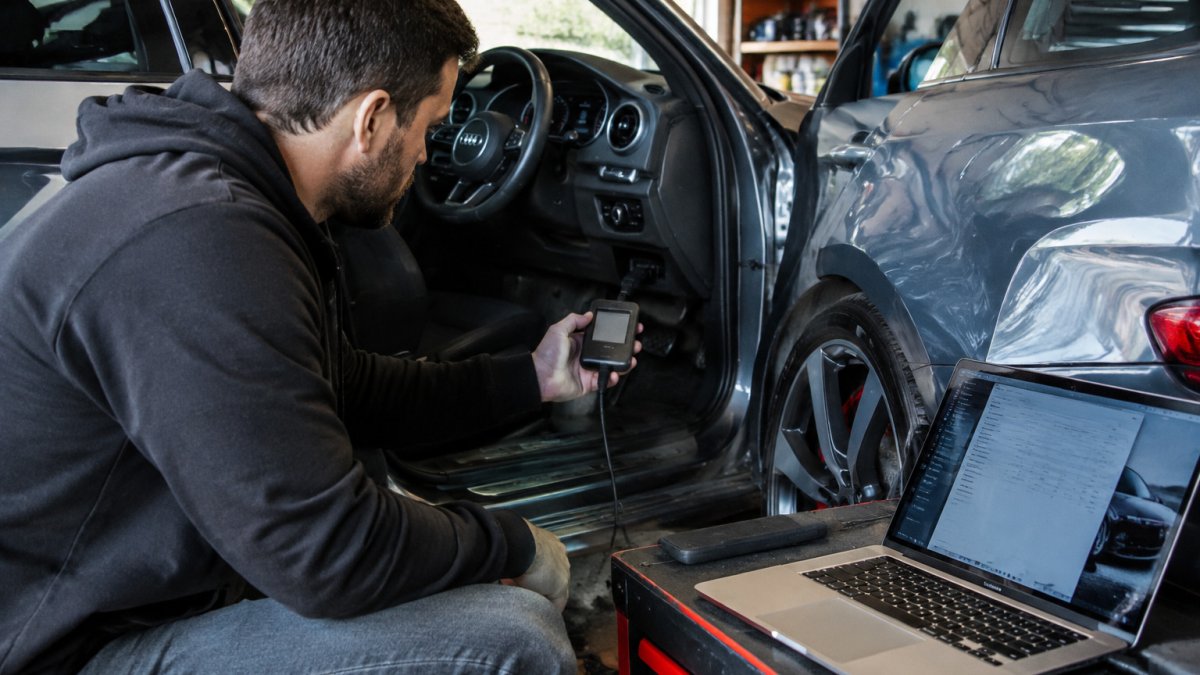
Install the tune with the FlashZilla handheld device, and keep the original factory file backed up in case you need to revert.
Frequently Asked Questions
Is the JB4 better than RaceChip for an Audi?
The JB4 and RaceChip are both piggyback-style options, but they work differently. A piggyback module sits between the sensors and the ECU and changes the signals the ECU sees, while an ECU tune rewrites the engine software directly. The honest answer depends on your engine, goals and budget. Confirm fitment for your exact model and engine code before choosing either option.
Which Audi tuner is best for my car?
The best option depends on your Audi model and engine code. H&A Midwest lists ECU tunes for the Audi A3 1.8T TSI FWD, A3 2.0 TDI, A3 2.0 TDI 140PS, A3 2.0 TFSI EA8113 and A3 2.0T EA888 EVO4. Each tune includes the required FlashZilla handheld device for self-install. Check your Make, Year, Model and Engine code on the product page before ordering so you get the right file.
What is the difference between a piggyback tuner and an ECU tune?
A piggyback tuner plugs in between existing sensors and the engine control unit and alters the signals the ECU receives, leaving the factory software untouched. An ECU tune changes the engine control software itself. Piggyback units are generally easier to remove, while ECU tunes give more direct control over the engine maps. H&A Midwest's Audi tunes are ECU tunes delivered with the FlashZilla handheld device for flashing.
Does the Tunezilla tune include the hardware?
Yes. Each H&A Midwest Tunezilla tune for Audi is sold with the required FlashZilla handheld device for self-install, so you do not need to buy hardware separately. Prices listed on the product pages start at 433.10 for the A3 2.0 TDI 140PS, 2.0 TFSI EA8113 and 2.0T EA888 EVO4, 469.10 for the A3 2.0 TDI, and 505.10 for the A3 1.8T TSI FWD.
