
7 Best Performance Parts for Stage 2 Tuning
Quick Summary
Stage 2 tuning is a deeper engine remap than Stage 1 that is written for a car with added hardware such as an upgraded intake, exhaust, and intercooler. The best performance parts for stage 2 tuning are usually an upgraded intercooler, a high-flow downpipe and exhaust, and a performance air intake, with fuel and drivetrain upgrades added as power rises.
- Stage 1 changes only the engine control software, while Stage 2 assumes supporting hardware has been fitted.
- Fit an upgraded intercooler first, because heat is usually the limiting factor on turbo platforms.
- A high-flow downpipe and exhaust reduce back pressure so the turbo can support higher boost.
- Confirm your exact make, year, model and engine code before ordering any Stage 2 tune.
- Flashing a Stage 2 map onto a car with stock parts risks overboost and knock.
Table of Contents
- What Stage 2 Tuning Involves and How It Differs From Stage 1
- Stage 2 Tune Requirements: What Your Car Needs Before the Flash
-
The Stage 2 Tuning Parts List, Ranked by Priority
- 1. Intercooler and Charge-Air Cooling (Essential First)
- 2. High-Flow Downpipe and Exhaust (Essential, With Legal Caveats)
- 3. Performance Air Intake (Essential on Most Platforms)
- 4. Fuel-System Upgrades: Injectors and High-Pressure Pump (Platform-Dependent)
- 5. Turbocharger Upgrade (Optional at Stage 2, Essential at Stage 3)
- 6. Clutch and Drivetrain Capacity (Essential Once Torque Rises)
- Vehicle-Specific ECU Tuning: Matching the Tune to Your Platform
- Stage 2 Tune Reliability, Maintenance and Warranty Trade-Offs
- Choosing Your Stage 2 Tune Package for Your VW, Audi, BMW or Mercedes-Benz
- Frequently Asked Questions
What Stage 2 Tuning Involves and How It Differs From Stage 1
Last Updated: November 1, 2026
Stage 2 tuning is a deeper engine remap than Stage 1, and it is the point where most owners of a Volkswagen, Audi, BMW or Mercedes-Benz start to need physical upgrades. H&A Midwest offers Tunezilla tunes for this step, and each tune purchase includes the FlashZilla hardware needed to flash the car yourself through the OBD port.
Stage 1 typically changes only the engine control unit software. It raises boost and adjusts timing within the limits the stock hardware can handle. Stage 2 goes further: the software is rewritten to take advantage of supporting parts such as a better intake, a freer-flowing exhaust, and a larger intercooler. Those parts move more air and remove more heat, so the calibration can safely push further.
The practical difference is this. Stage 1 is a software-only change. Stage 2 is a software change that assumes hardware has been added.
The table below summarises what each stage generally involves.
| Stage | Software change | Hardware required | Typical use |
|---|---|---|---|
| Stage 1 | Remap for stock hardware | None beyond the stock setup | Daily driving with minimal change |
| Stage 2 | Remap tuned to added parts | Intake, exhaust, intercooler | Enthusiast builds seeking more power |
Watch out: Flashing a Stage 2 map onto a car still running stock parts is a common way to cause overboost or knock. Match the tune to the hardware you actually have.
Stage 2 Tune Requirements: What Your Car Needs Before the Flash
Before you flash anything, confirm the car is in a suitable condition for a deeper tune. A Stage 2 map asks more of the engine, so a worn or faulty car will show problems sooner.
Check these items first:
- The engine runs cleanly with no active fault codes
- Spark plugs, filters and fluids are recent and within service intervals
- The fuel system can supply the extra demand, including the fuel pump and injectors
- Your make, year, model and engine code match the tune exactly
Confirming the engine code matters most. The H&A Midwest catalogue lists separate tunes for the EA888 EVO4, EA888.3 and TSI variants. Always confirm your Make, Year, Model and engine code before ordering.
The Stage 2 Tuning Parts List, Ranked by Priority
This section ranks common Stage 2 parts by priority and flags fitment constraints so you can build a setup that matches your actual hardware.
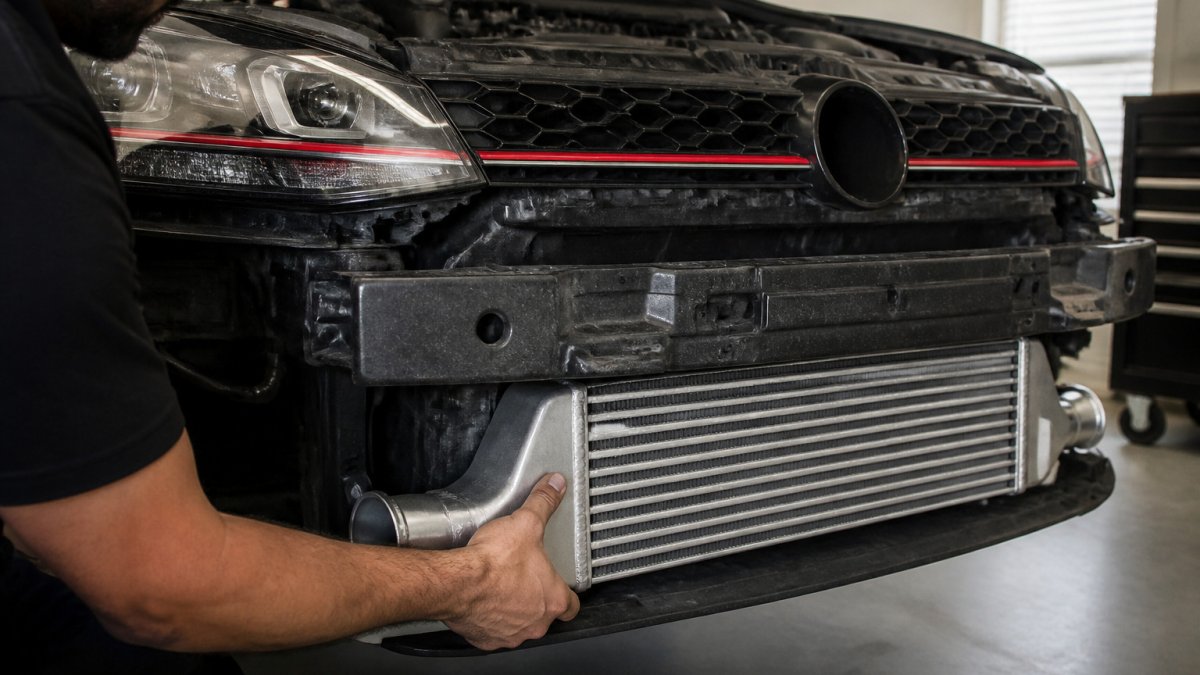
The ranking below reflects one practical order for assembling Stage 2 hardware.
1. Intercooler and Charge-Air Cooling (Essential First)
An upgraded intercooler lowers intake air temperature after the turbo compresses it. Cooler, denser air allows more ignition advance and boost without knock, and it is usually the first hardware change because heat is the limiting factor on most turbo platforms.
- Essential or optional: Essential on turbo cars running repeated pulls or warm climates; optional only on short-duration street use.
- Fitment notes: Confirm core dimensions, inlet/outlet diameter, and whether the stock charge pipes and clamps are reused or replaced. Some platforms require trimming or a specific crash-bar clearance.
- Mechanism: Lower intake air temperature reduces the ECU's knock-driven timing retard, which is where much of the repeatable gain comes from.
2. High-Flow Downpipe and Exhaust (Essential, With Legal Caveats)
A high-flow downpipe and cat-back exhaust reduce back pressure after the turbo, letting it spool and flow more freely to support the higher boost a Stage 2 map targets.
- Essential or optional: Essential for most Stage 2 calibrations; a cat-back alone is often optional if the downpipe already addresses restriction.
- Fitment notes: Downpipe diameter, flange pattern, and sensor bung locations vary by engine code. Catted versus decatted designs change both flow and legality.
- Legal caveat: Emissions rules and inspection requirements vary by location, and some downpipe setups are not road-legal everywhere. Check local regulations before fitting.
3. Performance Air Intake (Essential on Most Platforms)
A performance intake improves airflow into the turbo and is typically required so the calibration has the airflow it expects.
- Essential or optional: Essential on most Stage 2 files; optional only where the stock airbox already flows adequately.
- Fitment notes: Confirm MAF housing diameter and sensor placement, a mismatched housing can skew fueling and trigger fault codes.
4. Fuel-System Upgrades: Injectors and High-Pressure Pump (Platform-Dependent)
Fuel-system upgrades such as larger injectors or a higher-capacity high-pressure pump keep the air-fuel mixture correct at higher output. Whether they are essential depends on the platform and target power.
- Essential or optional: Often optional at mild Stage 2 output but essential once injector duty cycle or fuel-rail pressure approaches its limit.
- Mechanism: A tune can only add fuel the hardware can deliver; a mismatch leans the engine out under load.
- Fitment notes: Injector flow rates and pump part numbers are engine-code specific, so confirm compatibility before ordering.
5. Turbocharger Upgrade (Optional at Stage 2, Essential at Stage 3)
A larger turbo or hybrid unit is usually optional at Stage 2 and becomes the defining hardware at Stage 3. Fitting one at Stage 2 typically requires a matching calibration and supporting fuel and cooling upgrades.
6. Clutch and Drivetrain Capacity (Essential Once Torque Rises)
Stock clutches and drivetrain components are designed for stock torque. Once Stage 2 torque rises, an upgraded clutch or drivetrain component becomes essential to avoid slip and premature wear.
- Essential or optional: Essential on manual cars and high-torque builds; optional on lower-torque automatic setups.
- Fitment notes: Torque rating and flywheel compatibility vary by transmission, so match the clutch to the measured torque the tune produces.
Vehicle-Specific ECU Tuning: Matching the Tune to Your Platform
A Stage 2 tune is specific to the platform it was written for. Differences in engine code, turbo, fuel system and emissions hardware all affect the calibration. This is why H&A Midwest lists tunes by exact model and engine rather than offering one generic file.
Examples from the current catalogue include the VW Golf GTI 2.0T EA888 EVO4, the Audi S3 2.0T EA888 315HP EVO4, and the BMW M3 3.0L S55. Each is calibrated for its own hardware, so the correct choice depends on which engine is under your bonnet.
Stage 2 Tune Reliability, Maintenance and Warranty Trade-Offs
This section covers the trade-offs that affect whether a Stage 2 build stays reliable: heat management, fuel quality, service intervals, component wear, and warranty implications.
Heat Management
Higher boost raises intake and exhaust temperatures. An upgraded intercooler addresses charge-air temperature, but oil and coolant temperatures also rise. A common pattern is to shorten oil-change intervals and monitor oil temperature on repeated pulls. On some platforms, an upgraded radiator or auxiliary cooler becomes worthwhile for track or sustained high-load use.
Fuel Quality and Octane
Stage 2 calibrations typically assume a minimum fuel octane. Running lower-octane fuel than the tune expects can cause knock and timing retard, which reduces power and increases stress. Confirm the fuel grade your calibration requires and use it consistently.
Service Intervals and Component Wear
Stock components are designed for stock output, and running higher output increases wear on clutches, drivetrain, and cooling components. Shortening oil-change intervals and inspecting spark plugs more frequently after a Stage 2 flash is a common approach. Worn plugs, filters, or fluids will show problems sooner under higher load.
Warranty Implications
Manufacturer warranty coverage can be affected by modifications, and the exact effect depends on your policy and location. Check your warranty terms before flashing, and keep records of maintenance and any professional tuning work.
Monitoring After the Flash
After the first drives, monitor for knock, boost spikes, and warning lights. Logging boost, fuel-rail pressure, and intake air temperature helps confirm the hardware and calibration are matched. Ignoring a fault code after tuning is one of the quickest ways to turn a performance upgrade into an expensive repair.
Choosing Your Stage 2 Tune Package for Your VW, Audi, BMW or Mercedes-Benz
Start by confirming your exact model and engine code, then decide which hardware you already have and which you still need. Match the tune to the parts fitted rather than the other way round.
Every H&A Midwest tune includes the FlashZilla hardware, so you can flash the car yourself. Browse the catalogue, confirm your engine code, and search for your vehicle to find the right package for your build.
Frequently Asked Questions
What parts do you need for a Stage 2 tune?
A typical Stage 2 tune pairs the ECU calibration with supporting hardware: a high-flow or turbo-back exhaust (often with a downpipe), a performance air intake, and an upgraded intercooler where the factory unit limits charge-air cooling. Fuel-system upgrades such as larger injectors or a higher-capacity fuel pump may be needed to keep the air-fuel ratio safe at higher boost. Confirm the exact requirements for your make, model and engine code before ordering, since a tune calibrated for one platform may not suit another.
Does Stage 2 tuning require a downpipe?
Not always, but a downpipe is one of the most common Stage 2 hardware upgrades because it reduces exhaust back-pressure on the turbocharger and allows the calibration to build boost and power more effectively. Whether it is required depends on the platform and the specific tune. Check the requirements listed for your vehicle before deciding, and remember that exhaust modifications may affect emissions compliance where you live.
What is the difference between Stage 1 and Stage 2 tuning?
Stage 1 is a software-only calibration that works within the factory hardware, typically giving modest gains in power and torque. Stage 2 pairs a more aggressive ECU calibration with supporting hardware such as exhaust, intake, intercooler and fuel-system upgrades, which allows higher boost and larger gains. Stage 2 delivers more power but also requires more parts, more installation work and closer attention to reliability.
Can Stage 2 tuning damage your engine or turbo?
It can, if the calibration, hardware or fuelling is mismatched or pushed beyond what the components tolerate. Common warning signs include overboost conditions and fault codes such as P0234. Reducing risk means using a tune built for your exact engine code, installing the supporting parts it expects, keeping the car in good mechanical condition and monitoring boost and fuel data after the flash.
