
Is DIY Engine Tuning Safe in 2026? What You Need to Know
Table of Contents
- Can I Tune My Engine Myself in 2026?
- What DIY Tuning Actually Involves
- Vehicle-Specific Safety Decision Framework
- Engine Tuning Tools for Beginners: What You Actually Need
- Safe ECU Tuning Practices Before You Flash
- Tuning Box vs ECU Remap: Which Is Safer for DIY?
- Real Risks of DIY Engine Tuning: Engine Damage and Wear
- 2026 Emissions, Warranty, and Legal Considerations
- Common DIY Engine Tuning Mistakes to Avoid
- Conclusion: Is DIY Engine Tuning Safe for You?
- Frequently Asked Questions
Last Updated: October 7, 2026
Can I Tune My Engine Myself in 2026?
Yes, you can tune your own engine in 2026, but safety depends on your car, tools, and process.
At H&A Midwest, we supply Tunezilla tunes for VW, Audi, BMW, and Mercedes owners, and every tune ships with the FlashZilla Pro or v3 hardware you need to flash it yourself.
The short answer: DIY tuning is safe when the tune is written for your exact engine code, you log your data, and you stop when something looks wrong.
What DIY Tuning Actually Involves
DIY tuning means reading your car's factory calibration, replacing it with a new file, and writing it back through the OBD port, 20 to 40 minutes on most VW, Audi, BMW, and Mercedes models.
Here is the basic flow:
- Connect a flash tool to the OBD port under the dash
- Read the stock ECU file and save a backup
- Load the new tune file onto the device
The hardware does the technical work. Your job is to confirm fitment, follow the prompts, and watch for warning signs after the flash.
What most guides miss: the tune file matters far more than the tool. A cheap device with a correct, vehicle-specific file beats a premium device with a generic one.
Vehicle-Specific Safety Decision Framework
Not every car is a safe DIY candidate. Use this framework before you buy anything.
| Your Situation | DIY Safe? | Why |
|---|---|---|
| Stock engine, correct tune file | Yes | Low stress, tested calibration |
| Bolt-ons, custom tune file | Yes, with logging | Needs data review after flash |
| Big turbo or built engine | No | Requires dyno tuning by a pro |
| Unknown history, high mileage | Risky | Weak parts fail under more power |
| Warranty still active | Risky | Flash can void coverage |
Engine Tuning Tools for Beginners: What You Actually Need
You need three things: a flash tool, a tune file matched to your car, and a way to log data. A laptop helps but is not always required.
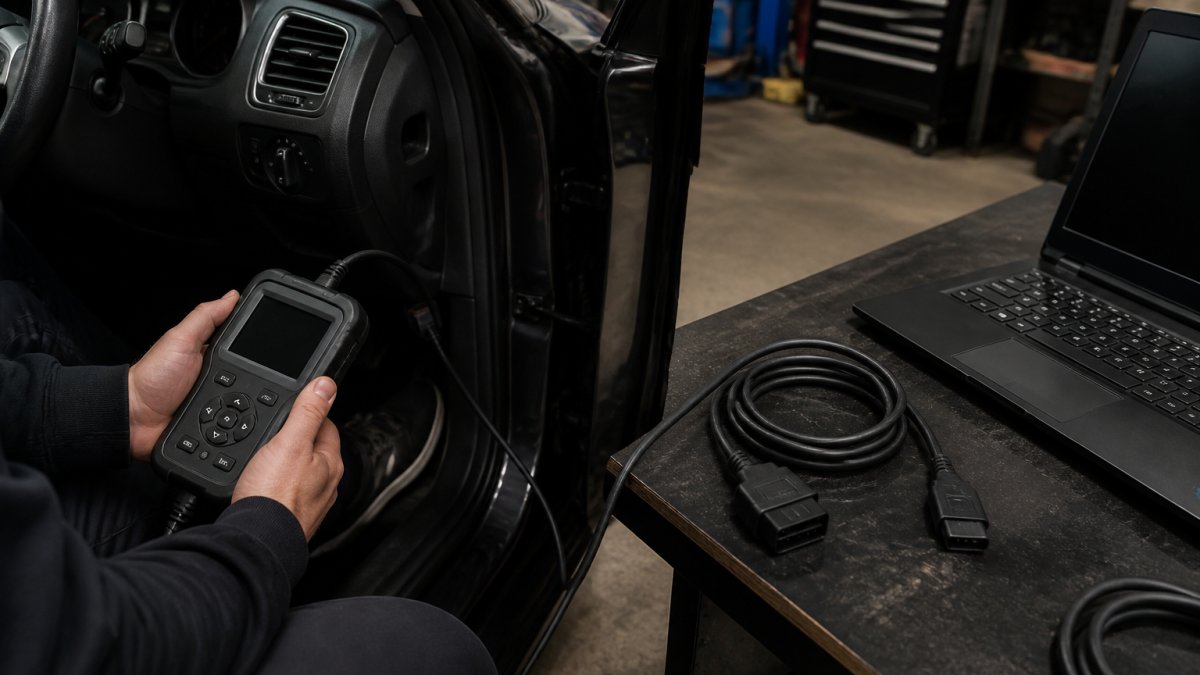
Beginners often overspend on hardware and underspend on the tune. The right order:
- Flash tool that supports your ECU type
- Vehicle-specific tune from a supplier who confirms fitment
- Diagnostic app for reading fault codes and live data
H&A Midwest bundles the FlashZilla Pro or v3 with every Tunezilla tune, so you get hardware and file in one package, see how this works on a Audi S3 2.0T EA888 315HP EVO4.
If you already own a flash tool, check whether it reads your ECU before buying a file separately. Compatibility gaps cause most failed flashes.
Safe ECU Tuning Practices Before You Flash
Safe ECU tuning starts before you touch the car. A 15-minute check prevents most problems.
Pre-Tuning Checklist and Stop Conditions
Run through this list every time:
- Battery voltage above 12.4V, or connect a charger
- Fuel tank at least half full
- No active fault codes
Stop and do not flash if:
- The device shows an invalid file error
- Battery voltage drops during the read
- You see fault codes you cannot explain
Tuning Box vs ECU Remap: Which Is Safer for DIY?
An ECU remap is safer for DIY when you have a correct file and logging tools. A tuning box is easier to remove but changes sensor signals rather than the calibration itself.
Here is the trade-off:
| Factor | Tuning Box | ECU Remap |
|---|---|---|
| Install time | 10-20 minutes | 20-40 minutes |
| Reversible | Yes, unplug it | Yes, reflash stock |
| Adjusts boost and fueling | Indirectly | Directly |
| Visible to dealers | Often no trace | Can leave a flash counter |
| Best for | Warranty worries | Real gains and control |
A tuning box is a safe first step if you want your warranty untouched.
For most German-car owners chasing real horsepower and torque gains, a proper remap is the better long-term choice.
Real Risks of DIY Engine Tuning: Engine Damage and Wear
DIY tuning damages engines through a few physical mechanisms. Understanding them tells you what to log, what to watch, and when to stop.
The four mechanisms that actually break engines
1. Knock (detonation). Knock happens when the air-fuel mixture ignites spontaneously ahead of the flame front, creating a pressure spike that hammers pistons, ring lands, and bearings.
2. Lean conditions. If the tune adds boost or airflow without adding fuel, the air-fuel ratio leans out.
3. Overboost. A tune that raises boost targets beyond what the turbo, wastegate, or map sensor can control can spike past target.
**4.
Risk differs by engine type
- Naturally aspirated (NA) engines. Gains come mostly from timing, fueling, and cam phasing. Risk is lower with no boost to overshoot, but knock risk rises if timing is advanced on low-octane fuel.
- Turbocharged engines. Gains come largely from boost. Risk is higher because boost, fueling, and timing interact, a mistake in any one can cause knock, lean conditions, or overboost. Most DIY tuning failures involve turbo cars.
- Hardware changes. A downpipe, intake, or larger turbo changes airflow and backpressure, so a tune written for stock hardware may run lean or overboost. Bolt-on cars need a tune written for those bolt-ons, and big-turbo builds need dyno tuning by a professional.
How to monitor a tune and recognize unsafe results
Logging is the difference between a safe tune and a gamble. After every flash, drive under load and review these channels:
- Knock retard, should stay near zero under load. Climbing values mean the ECU is pulling timing to save the engine.
- Boost pressure vs. target, actual boost should track target, not spike above it.
- Air-fuel ratio (AFR) or lambda, should stay near the tuner's target. Leaning out at high RPM is a stop condition.
Stop conditions: when to revert to stock
Revert to the stock calibration and stop driving hard if any of these occur:
- Knock retard that climbs and stays elevated under load
- Boost spiking above target, or a P0234-style overboost code
- AFR leaning out at high RPM or under sustained load
A common mistake is ignoring a small knock event because the car 'feels fine.' By the time you hear audible knock, damage may already be underway. The stock file you saved before flashing is your only reliable way back to a running car, the backup step is not optional.
2026 Emissions, Warranty, and Legal Considerations
A tune touches three separate legal and financial systems: emissions compliance, periodic inspection, and warranty coverage. Each is governed differently, by your jurisdiction, vehicle authority, and dealer or manufacturer, not the tuning industry. The 2026 angle matters because inspection regimes and emissions enforcement have been tightening in several major markets, and a tune that passed a few years ago may not pass today.
Emissions compliance: what a tune actually changes
A calibration change can alter air-fuel ratio, ignition timing, boost pressure, and exhaust gas temperature, variables that feed directly into tailpipe output and the onboard emissions monitor. Three consequences follow:
- Tailpipe output can shift. Richer or leaner fueling changes CO, HC, and NOx readings; a tune that adds boost without adjusting fueling can push NOx up under load.
- Readiness monitors can reset. Flashing the ECU typically clears emissions readiness monitors, and many jurisdictions require them to re-run via a specific drive cycle before you can pass inspection.
- Emissions hardware must stay intact. Removing, bypassing, or disabling catalytic converters, EGR, DPF, or SCR systems is illegal for road use in most markets, regardless of what the tune file does. Keeping all emissions hardware functional is the only defensible path for a street car.
Inspection regimes vary, and the trend is stricter
There is no single global rule. The pattern across major markets:
- United States: Emissions inspection is state-by-state, some run OBD-II plug-in checks only, some run tailpipe sniffers, some have none. California's CARB framework is the strictest; a tune that alters emissions-related calibration can fail a CARB functional check even if the tailpipe reads clean.
- European Union: Periodic technical inspection (PTI) checks emissions equipment and, in many member states, now includes OBD-based tampering checks. Germany's TÜV and the UK's MOT both increasingly detect calibration tampering rather than just tailpipe output.
- Other markets: Canada, Australia, and Japan each run their own frameworks, differing by province, state, or prefecture. Check the authority that issues your registration or inspection sticker.
Because these regimes change on their own schedules, verify current requirements with your local vehicle authority before you flash, not after.
Warranty: how a denial actually works
Warranty is not automatically voided by a tune. In the US, the Magnuson-Moss Warranty Act generally prevents a manufacturer from voiding an entire warranty simply because aftermarket parts are present, but it can deny a specific claim if it shows the modification caused the failure. In practice:
- A tune-related powertrain failure (turbo, clutch, pistons, transmission) is the highest-risk claim.
- An unrelated failure (infotainment, suspension, body) is much harder to tie to a tune.
- Dealers can often see a flash counter or calibration checksum even after a reflash to stock, so 'revert before service' is not a guaranteed shield.
Outside the US, EU block exemption rules and manufacturer-specific terms govern coverage, and some manufacturers take a stricter line than US law requires. Read your warranty document and, if the car is financed or leased, your lease agreement, a lease can impose its own restrictions independent of the warranty.
A practical 2026 pre-flash legal check
Before you flash, answer these four questions:
- Does my jurisdiction require periodic emissions inspection, and does it use OBD, tailpipe, or both?
- Will flashing reset readiness monitors, and do I know the drive cycle needed to reset them?
- Does the tune keep all factory emissions hardware intact and functional?
- Is my car under warranty or lease, and what does the contract say about calibration changes?
If you cannot answer all four, you are not ready to flash. The tune may be perfectly safe for the engine and still create a legal or financial problem that costs more than the tune did.
Common DIY Engine Tuning Mistakes to Avoid
Most DIY tuning failures come from a handful of repeat mistakes. Avoiding them removes the bulk of the risk.
- Flashing a file for the wrong engine code
- Skipping the stock file backup
- Flashing on a weak battery
Conclusion: Is DIY Engine Tuning Safe for You?
DIY engine tuning is safe when your car is healthy, your tune is written for your exact engine code, and you log your data and act on what you see.
If you want hardware and tune in one package, H&A Midwest supplies Tunezilla tunes for VW, Audi, BMW, and Mercedes, and every purchase includes the FlashZilla Pro or v3 device, with vehicle-specific optimization and support if something goes wrong.
Get started with H&A Midwest and flash your first tune with the right hardware in hand.
Frequently Asked Questions
Does chiptuning damage an engine?
Chiptuning does not automatically damage an engine, but the risk depends on how aggressive the tune is and whether your hardware can handle the added stress. A moderate ECU remap from a reputable tuner that stays within safe boost and air-fuel ratio limits is generally fine for a healthy engine. Problems arise when tunes push boost pressure or ignition timing beyond what the turbo, fuel system, or internals can support. Following safe ECU tuning practices and monitoring sensor data after flashing keeps the risk low.
What tools do I need to tune my engine safely?
At minimum you need a flash tool compatible with your ECU, a laptop or handheld device to run the tuning software, and a way to read diagnostic fault codes. A data logging tool or OBD scanner that shows live sensor data helps you confirm the tune is running safely. For VW, Audi, BMW, and Mercedes owners, packages like the Audi A3 1.8T TSI FWD tune include the required FlashZilla handheld device for self-install at $505.10. Always confirm your make, year, model, and engine code before ordering.
Can an ECU tune shorten engine life?
An ECU tune can shorten engine life if it consistently pushes components past their design limits. Higher boost pressure and aggressive ignition timing increase cylinder pressure and heat, which accelerates wear on turbos, pistons, and head gaskets over time. A conservative tune that respects the engine's stock hardware limits typically has minimal impact on longevity. Regular oil changes, monitoring for knock or detonation, and watching coolant and oil temperatures are the best ways to protect your engine after tuning.
How can I tell if an engine tune is too aggressive?
Warning signs include persistent knock or detonation, a check-engine light with fault codes like P0234 for overboost, rising coolant or oil temperatures under normal driving, and a noticeable drop in fuel economy. If the car hesitates, surges, or feels less drivable than stock, the tune may be pushing too hard. Data logging boost pressure, air-fuel ratio, and ignition timing lets you compare actual values against safe ranges. Stop driving and revert to the stock calibration if any of these appear.