
Aftermarket Parts for Volkswagen: A 2026 Buyer's Guide
Table of Contents
- What Are Aftermarket Parts for Volkswagen and Why They Matter
- ECU Tuning and Performance Upgrades: The Foundation of VW Performance Tuning
- VW ECU Tuning Benefits: What You Actually Gain
- OEM vs Aftermarket VW Parts: Making the Right Choice
- Top Aftermarket ECU Tuning Options for Volkswagen Models
- DIY vs Professional Installation: Cost-Benefit Analysis
- How Aftermarket Parts Affect Your Volkswagen Warranty
- Fitment Compatibility and Installation Hardware
- Frequently Asked Questions
Last Updated: October 4, 2026
What Are Aftermarket Parts for Volkswagen and Why They Matter
Aftermarket parts for Volkswagen are components sourced from manufacturers other than Volkswagen's OEM, ranging from ECU remapping to suspension and exhaust upgrades. The choice directly impacts performance, engine calibration, and reliability.
Aftermarket parts deliver measurable improvements at a fraction of OEM pricing. But warranty implications, fitment compatibility, and installation quality all factor into whether an upgrade makes sense for your vehicle.
The most successful modifications combine proper engine calibration with quality aftermarket components tailored to your specific model.
ECU Tuning and Performance Upgrades: The Foundation of VW Performance Tuning
ECU tuning is where most VW performance modifications start. Your engine control unit manages fuel injection timing, boost pressure, and ignition timing. Adjusting these parameters unlocks performance gains that bolt-on parts alone cannot achieve.
How ECU Remapping Works
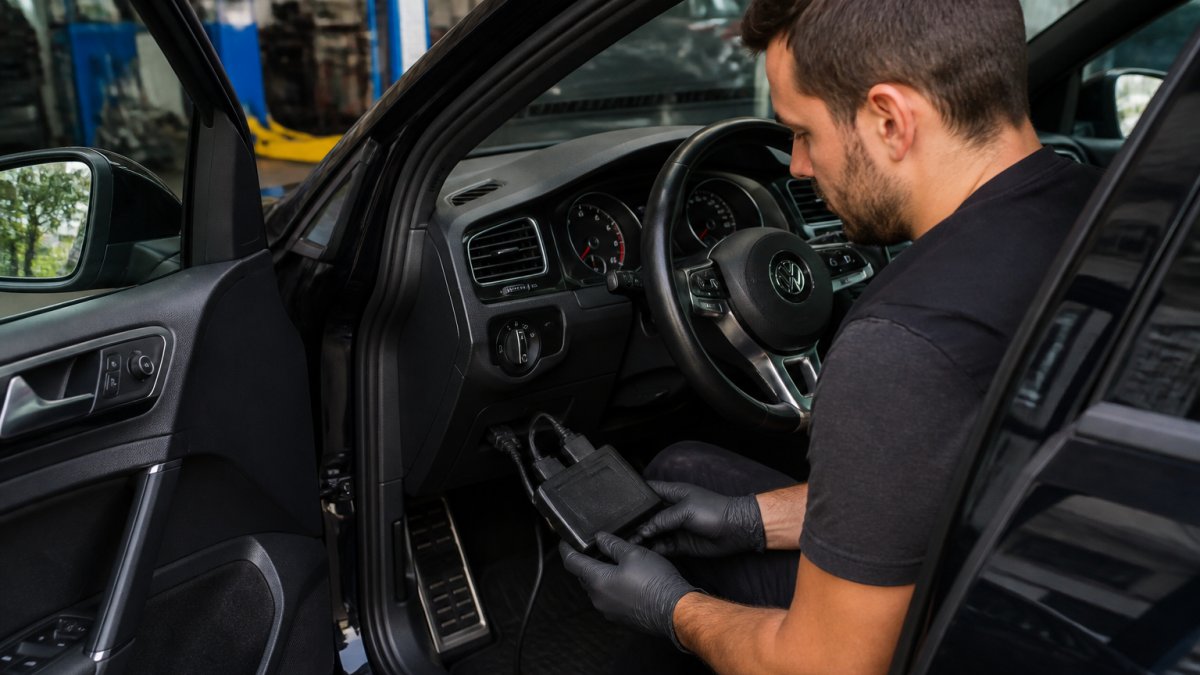
ECU remapping accesses your vehicle's engine calibration through the OBD port. A flashing device reads the factory tune, modifies parameters within safe limits, and writes the new calibration back to the ECU, leaving hardware untouched.
The process takes 30 minutes to 2 hours. Your VW Golf 2.0 TDI connects via a standard OBD-II interface. The flashing hardware, like the FlashZilla Pro included with H&A Midwest tunes, communicates directly with your ECU to upload the optimized calibration with no mechanical work or visible changes.
Engine code verification is critical. A tune written for a Golf GTI 2.0T EA888.3 won't work on a Golf R 2.0T EA888 315HP EVO4. Installing the wrong tune risks overboost conditions or flashing failure.
Horsepower and Torque Gains
Common results include:
- Golf GTI 2.0T: noticeable throttle response improvement and mid-range torque increase
- Golf R 2.0T: measurable acceleration gains without aggressive boost spike
- Golf 2.0 TDI: significant torque improvement, particularly in the 1,500-3,500 RPM band
- Tiguan 2.0T TSI: balanced performance gain with maintained drivability
- Touareg 3.0 TDI: substantial low-end torque for a larger displacement engine
VW ECU Tuning Benefits: What You Actually Gain
A proper ECU tune sharpens throttle response, improves mid-range pull, and delivers more precise fuel delivery.
OEM vs Aftermarket VW Parts: Making the Right Choice
The OEM versus aftermarket decision isn't binary. Some components benefit from OEM sourcing. Others are better served by quality aftermarket options. The choice depends on the specific part, your warranty status, and your long-term ownership plans.
Cost Comparison
A factory-equivalent tune from H&A Midwest costs $433-$748 and includes the FlashZilla hardware with no dealer appointment or labor charges.
Warranty Implications
Volkswagen's factory warranty covers defects in materials and workmanship, not modifications. Any modification technically voids warranty coverage for affected components. Dealers rarely deny claims on unrelated systems, but can refuse coverage if engine problems relate to the tune.
Keep the original tune file backed up. If a warranty claim becomes necessary, flash the stock tune back into the ECU before visiting the dealer, then reflash the performance tune after warranty work is complete.
For out-of-warranty vehicles, this consideration disappears entirely. Aftermarket parts become purely a question of reliability and value.
Top Aftermarket ECU Tuning Options for Volkswagen Models
Gasoline Engine Tuning: Golf R and Golf GTI
The VW Golf GTI 2.0T EA888.3 tune costs $559.10 and includes FlashZilla Pro hardware, delivering immediate throttle response improvement and mid-range torque.
The VW Golf R 2.0T EA888 315HP EVO4 tune costs $433.10 and includes flashing hardware. It optimizes boost control and fuel delivery for sharper acceleration without aggressive overboost that damages turbochargers.
Diesel Engine Tuning: TDI Models Across the Range
The VW 2.0 TDI 140PS is the most popular TDI option across Golf, Jetta, Passat, Beetle, and EOS models.
The VW Golf 2.0 TDI 140PS tune costs $433.10 and improves throttle response and mid-range torque. Confirm your engine code before ordering, as different model years use different ECU hardware.
The VW Jetta 2.0 TDI 140PS tune costs $433.10 and delivers identical benefits with more pronounced gains due to the Jetta's lighter weight.
The VW Passat 2.0 TDI 140PS tune costs $433.10 and makes highway merging and passing feel significantly easier.
Larger Displacement and SUV Options
The VW Tiguan 2.0T TSI costs $748.10 and provides balanced performance improvement without compromising practicality. It delivers noticeably faster acceleration and more responsive throttle feel.
The VW Touareg 3.0 TDI 245PS represents the flagship diesel option. At $748.10, it includes the FlashZilla hardware and vehicle-specific optimization for the 3.0 TDI engine.
For truck owners, the VW Amarok 2.0 TDI 122HP tune costs $505.10 and delivers practical torque improvement for towing and hauling.
| Model | Engine Type | Starting Price | Best For |
|---|---|---|---|
| Golf GTI 2.0T EA888.3 | Gasoline Turbo | $559.10 | Performance enthusiasts seeking throttle response |
| Golf R 2.0T EA888 315HP | Gasoline Turbo | $433.10 | R owners wanting optimized boost control |
| Golf 2.0 TDI 140PS | Diesel | $433.10 | Efficiency-focused owners wanting torque |
| Jetta 2.0 TDI 140PS | Diesel | $433.10 | Budget-conscious diesel sedan owners |
| Tiguan 2.0T TSI | Gasoline Turbo | $748.10 | SUV owners prioritizing balanced performance |
| Touareg 3.0 TDI 245PS | Diesel | $748.10 | Luxury SUV owners seeking low-end torque |
| Amarok 2.0 TDI 122HP | Diesel | $505.10 | Truck owners needing towing capability |
DIY vs Professional Installation: Cost-Benefit Analysis
This is where aftermarket parts for volkswagen decisions become practical. ECU tuning can be done yourself using the included FlashZilla hardware, or you can pay a professional to handle the flashing. The choice affects both cost and risk.
DIY installation means you purchase the tune, receive the FlashZilla hardware, and flash your vehicle yourself using your home computer. The process takes 30 minutes to 2 hours with no appointment, labor costs, or dealer involvement. You maintain complete control and can reflash the stock tune anytime.
If something goes wrong during flashing, corrupted file, power loss, incompatible ECU hardware, you're responsible for troubleshooting.
Professional installation shifts the risk. A tuning shop verifies your engine code and handles flashing with support if issues arise.
For most VW owners, DIY installation is an option. The FlashZilla hardware is straightforward to use with correct engine code verification.
For owners uncomfortable with the process, professional installation provides peace of mind. For vehicles with unusual configurations or multiple previous tunes, professional verification is worth the extra cost.
How Aftermarket Parts Affect Your Volkswagen Warranty
Volkswagen's warranty covers defects in materials and workmanship for new vehicles. Any modification, even reversible ones like ECU tuning, technically falls outside factory warranty protection.
Volkswagen dealers use a reasonable-cause standard when evaluating warranty claims on modified vehicles. If your transmission fails, the dealer won't deny coverage. But if your engine experiences damage potentially related to the tune, the dealer can refuse coverage.
For vehicles under factory warranty, ECU tuning alone is an option. It leaves engine hardware stock, which may minimize warranty risk.
Keep your original tune file backed up. If a warranty claim becomes necessary, flash the stock calibration back into your ECU before visiting the dealer. Once warranty work is complete, reflash your performance tune. This approach requires the flashing hardware and technical comfort, but it's a practical solution for owners who want both performance and warranty protection.
For out-of-warranty vehicles, this consideration disappears. Aftermarket modifications become purely a question of reliability and value.
Fitment Compatibility and Installation Hardware
This is the technical detail that separates successful aftermarket upgrades from expensive failures. Fitment compatibility means the part physically fits your vehicle and the software works with your specific ECU hardware.
For ECU tuning, compatibility starts with your engine code. A VW Golf GTI uses the EA888.3 engine code. A Golf R uses EA888 315HP EVO4. These look similar but have different ECU hardware, different fuel systems, and different factory calibrations. A tune written for one won't work on the other. Installing the wrong tune causes flashing failure or, worse, a mismatched calibration that damages your engine.
This is why H&A Midwest requires you to confirm your Make, Year, Model, and Engine Code before ordering. The FlashZilla hardware connects to your OBD port and reads your ECU to verify compatibility. If the hardware detects a mismatch, the flashing process stops before any damage occurs.
Installation hardware matters equally. The FlashZilla Pro and v3 devices included with every H&A Midwest tune are vehicle-specific flashing tools designed for OBD-II compatibility. They are engineered to communicate with Volkswagen ECU hardware and include the firmware necessary for safe flashing.
For physical aftermarket parts, fitment compatibility is critical. A suspension upgrade for a Golf GTI won't fit a Golf R due to chassis geometry differences. Always verify fitment specifications before ordering.
The FlashZilla device included with your tune is the bridge between your computer and your vehicle's ECU. Using a different flashing device risks incompatibility or failed flashing.
Aftermarket parts for Volkswagen succeed when they're matched to your specific vehicle, installed correctly, and integrated into a coherent performance strategy. ECU tuning is the foundation and requires no physical modifications. From there, you can add physical upgrades like suspension, brakes, or exhaust components based on your driving priorities and budget.
At H&A Midwest, we specialize in providing high-performance Tunezilla tuning solutions. Every tune includes the FlashZilla hardware you need for installation. Every tune is engineered for your exact engine code. Experience enhanced performance and precision engineering with our expert tuning support. Start with ECU tuning, verify fitment compatibility, and build your performance package from there.
Frequently Asked Questions
Do aftermarket parts void my Volkswagen warranty?
Aftermarket ECU tuning can affect your manufacturer warranty, though the impact depends on your vehicle's age and the specific modification. However, if your car develops an engine fault, Volkswagen may deny coverage if they trace the issue to the tune. Always review your warranty terms before installing aftermarket parts.
What are the main VW ECU tuning benefits?
ECU tuning optimizes your engine's fuel injection timing, boost pressure, and ignition timing to unlock additional horsepower and torque. Beyond raw performance, you gain improved throttle response and better acceleration feel. The complete package, tune plus FlashZilla hardware, delivers these benefits through a single, vehicle-specific solution.
Can I install an ECU tune myself, or do I need a professional?
You can perform DIY installation using the FlashZilla Pro or v3 hardware included with every H&A Midwest tune. The process involves connecting the device to your OBD port, following on-screen prompts, and waiting for the flash to complete. No mechanical work is required. However, if you're not comfortable with the technical process or want professional support, many tuning shops offer installation services. Verify your specific vehicle's fitment compatibility and engine code before ordering to avoid issues like Error_Invalid_File or ECU communication failures.
How do I know if aftermarket parts are compatible with my Volkswagen?
Fitment compatibility depends on your vehicle's make, year, model, and engine code. Before purchasing any ECU tune from H&A Midwest, confirm your exact engine code, found in your service records or on the engine block, and match it to the correct product listing. Each tune is calibrated for specific engine variants like the 2.0T EA888, 2.0 TDI 140PS, or TSI engines. Installing the wrong tune can cause overboost conditions, error codes like P0234, or flash failures. Always verify fitment before checkout.
What's the price range for aftermarket VW tuning?
H&A Midwest ECU tunes range from $433.10 for most 2.0 TDI and gasoline models up to $748.10 for larger displacement engines like the Tiguan TSI and Touareg TDI. The Golf GTI 2.0T EA888.3 costs $559.10, while the Amarok 2.0 TDI is $505.10. Every tune includes the FlashZilla handheld device needed for self-installation, so there are no additional hardware costs. Pricing reflects the vehicle-specific calibration and professional-grade support included with each purchase.